
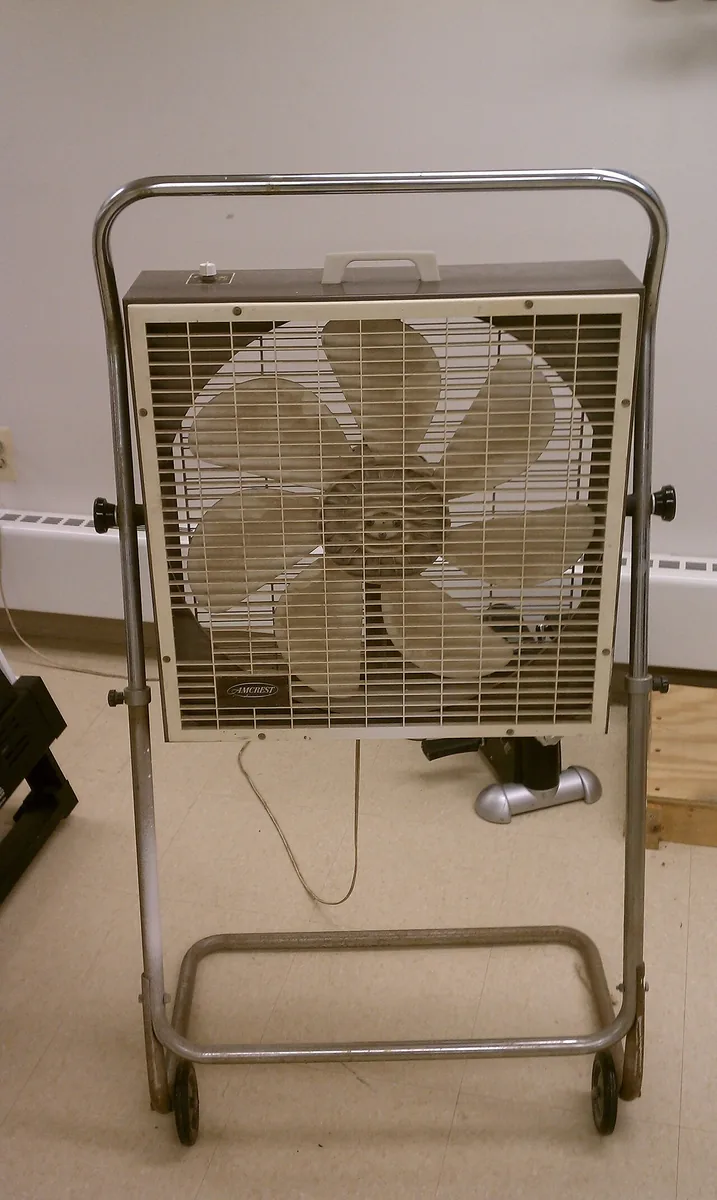
A box fan in a doorway can evaporate some surface water and still leave a wet cavity behind the base. Household air movement has a place after a small, clean spill on a hard floor. It is not a substitute for a moisture map when pad, plaster, or a workplace floor is involved.
By Chester County Water Damage
If the loss is more than a contained spill, call (484) 293-9465. Water removal and drying runs 24/7 for homes and workplaces, including Exton townhomes and suites.
Where a household fan can still help
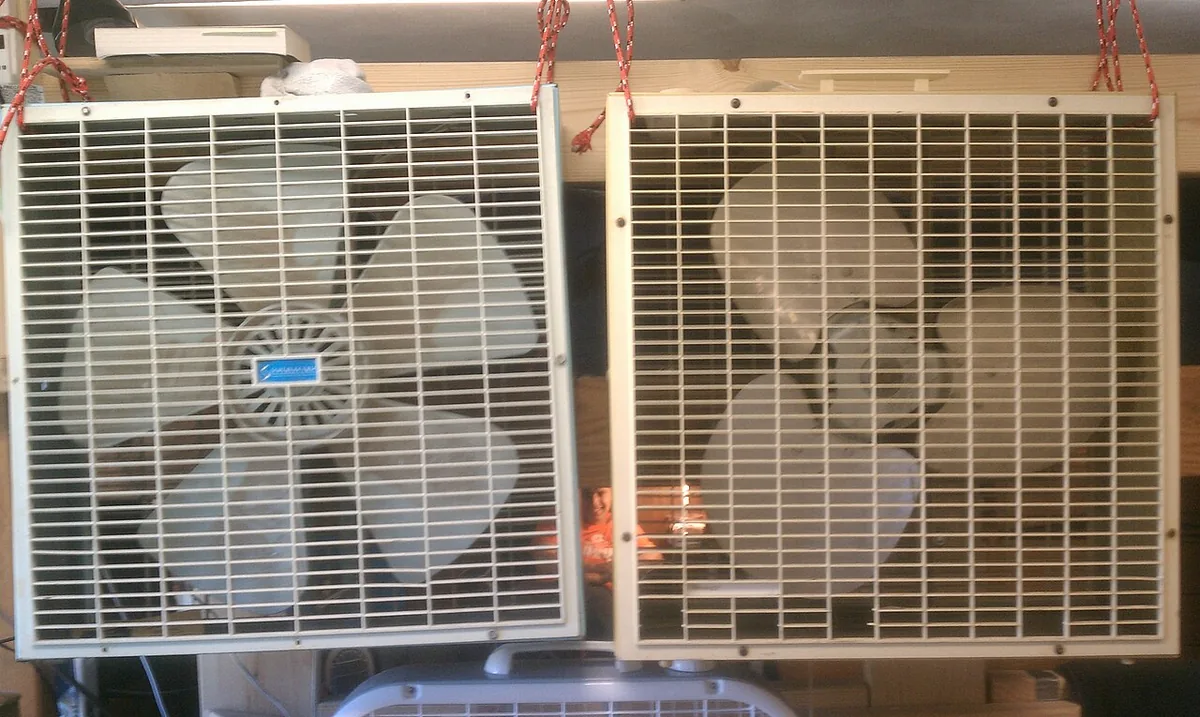
A small amount of clean water on a hard, non-porous floor, caught immediately, may dry with towels, a purpose-built wet vac, and air movement — if the water did not reach a pad, a cavity, or a finish that swells. In that narrow case, a fan is a tool, not a plan. Photograph the spill anyway. If you are unsure whether the water went further, stop guessing and have the rooms metered.
The EPA’s household mold guide still urges drying wet materials within 24 to 48 hours when you can (EPA brief guide). A fan that only dries the surface can spend that window unsuccessfully.
Where household fans fall short
- Carpet pad and the bottom of a finished wall
- Plaster, hardwood, and tight chases
- Dirty or unknown water, including outdoor entry
- A workplace floor that must be documented for a claim
- Any loss where the source is not actually stopped
Pointing air at mud or sewage is the wrong hygiene path. See flood cleanup and what not to do after indoor water. Cranking the heat “to dry the house” can also push humidity into the next room. That is not a measured plan.
What a measured dry-out adds
| Piece | Household fans | Measured dry-out |
|---|---|---|
| Extraction | Mop, towels, maybe a shop tool | Professional extraction first |
| Hidden moisture | Guess | Meters and a map — see moisture meters |
| Humidity control | Whatever the room happens to do | Dehumidifiers sized to the load |
| Close-out | “It feels dry” | A written target and a log |
| File for a carrier | Informal photos, if any | Photos plus readings |
Typical house mitigation on this site is in the $1,300–$5,500 guide when the scope is typical. A fan is cheaper on hour one and can be more expensive if a cavity is still wet a week later. We will not invent a percentage of “DIY jobs that fail.” We will say when a fan is not enough.
Workplaces and the appearance problem
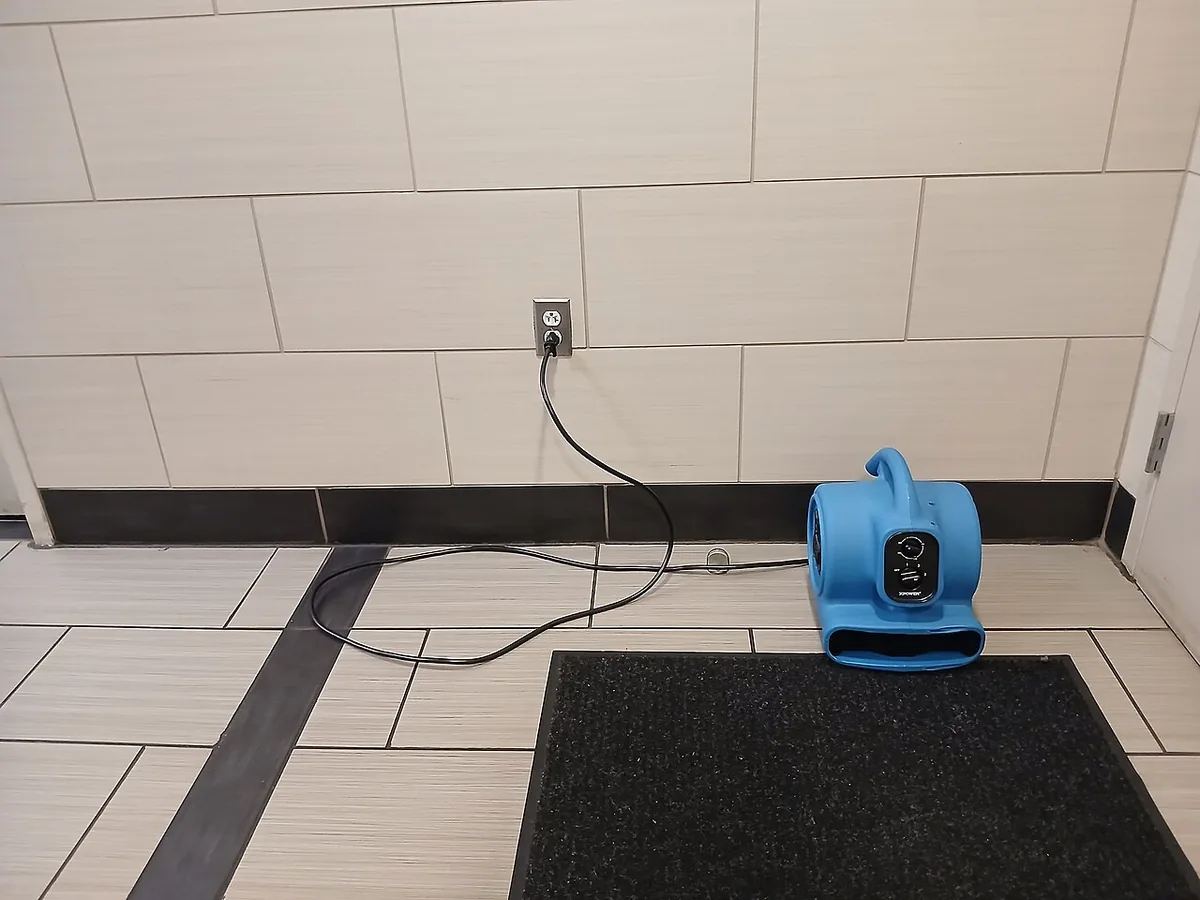
Managers sometimes prefer a quiet box fan to visible restoration equipment during business hours. Appearance is a real constraint; it is not a drying method. After-hours extraction and a smaller daytime footprint can be a compromise. Turning all equipment off so a lobby looks normal is how Monday becomes the following Monday. See commercial water damage and weekend leak, Monday downtime.
Power, noise and living in the building
A measured plan is noisier and uses more electricity than a single fan. We will tell you where machines will sit and whether a dry bedroom remains usable. If you prefer to sleep elsewhere for a night or two, that is a reasonable choice, not a failure. Do not unplug equipment to “save the bill” without talking to us; you may reset the clock.
Safety still comes before either approach
No fan plan, and no professional plan, starts with walking into energized water. If you cannot reach a breaker from a dry floor, leave the room and call. Household fans also should not be placed where they can fall into a puddle or overload a questionable strip. Those are ordinary precautions, and they are still missed.
Townhomes, suites and shared air
In an Exton townhome or a suite with a shared corridor, a fan can also push humid air toward a neighbor. That is one more reason a contained, measured plan is kinder in attached housing than an overnight blast at an open door. If a party wall may be wet, stop improvising and get a map.
Frequently asked questions
I already ran fans for two days. Should I still call?
Yes, if anything still feels damp, smells musty, or was a finished assembly. Tell us what you already did.
Can fans plus a dehumidifier I own replace a crew?
Sometimes for a tiny, clean, hard-floor spill. Not for pad, walls, or dirty water.
Will you use my fans in the plan?
Usually we bring equipment sized to the loss. Ask on site.
Does a measured dry-out always mean tearing out the room?
No. Openings follow readings. See the finished basement guide when lower-level finishes are involved.
Are you available if I decide at 11 p.m. that the fans are not enough?
Yes. (484) 293-9465 is 24/7.
A closing rule of thumb
If you can see all of the water, it is clean, it is on a hard surface, and it is already gone, household air may finish the surface. If you cannot see all of the water, call. That rule is humble on purpose.
Not sure whether fans are enough? Call (484) 293-9465 — we will tell you honestly after we know the rooms.