
A finished lower level that took water is not only a puddle on a floor. Carpet pad, base trim, and the first inches of a wall often hold moisture after the surface looks better. This guide explains what typically has to leave so drying can work, and what may stay.
By Chester County Water Damage
If the space is wet now, call (484) 293-9465. Basement flooding help runs 24/7 across Chester County, including Berwyn and nearby Main Line streets.
The first fork: where the water came from
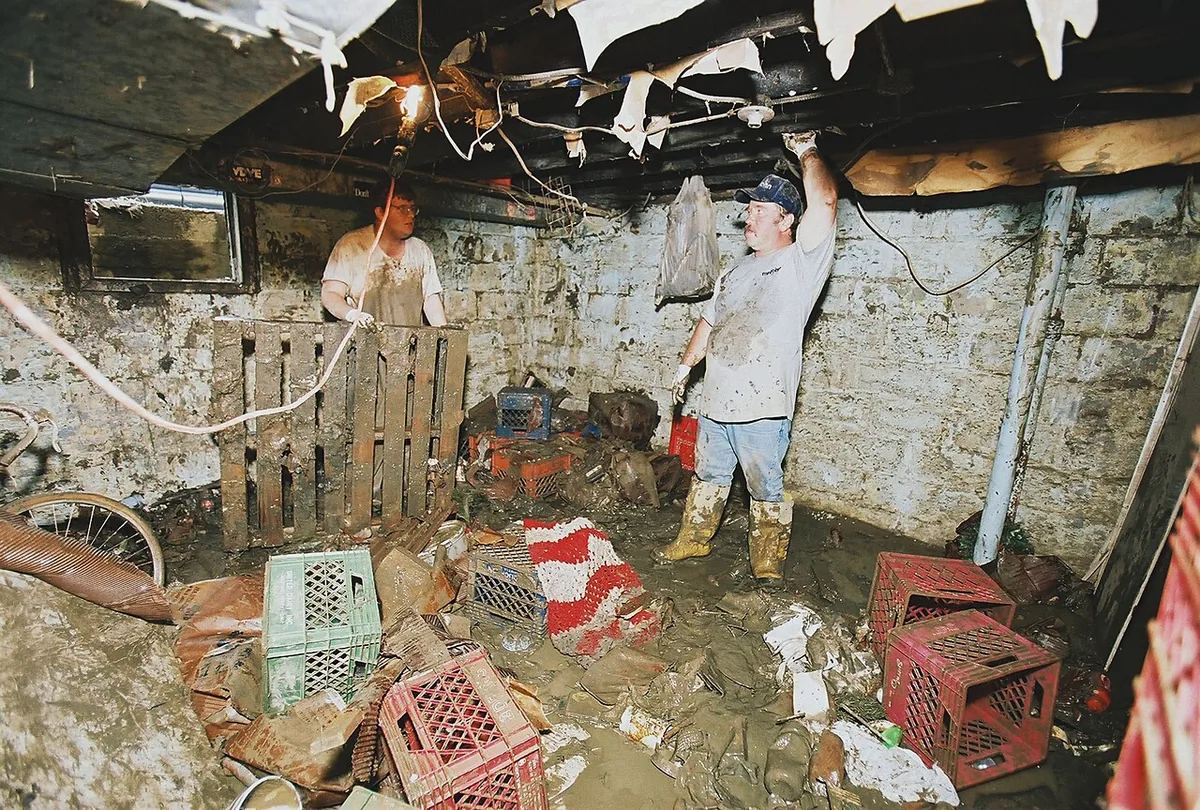
A clean supply leak, a pit overflow, and outdoor water at a patio door are not the same hygiene problem. Dirty or unknown water usually means more porous material leaves. We would rather explain that on site than pretend every basement is a “dry it in place” job. When the source was overland, start with flood cleanup.
What often has to come out
Carpet pad. Pad holds water and is difficult to dry reliably, especially after anything other than a brief, clean spill. The face carpet is a separate decision.
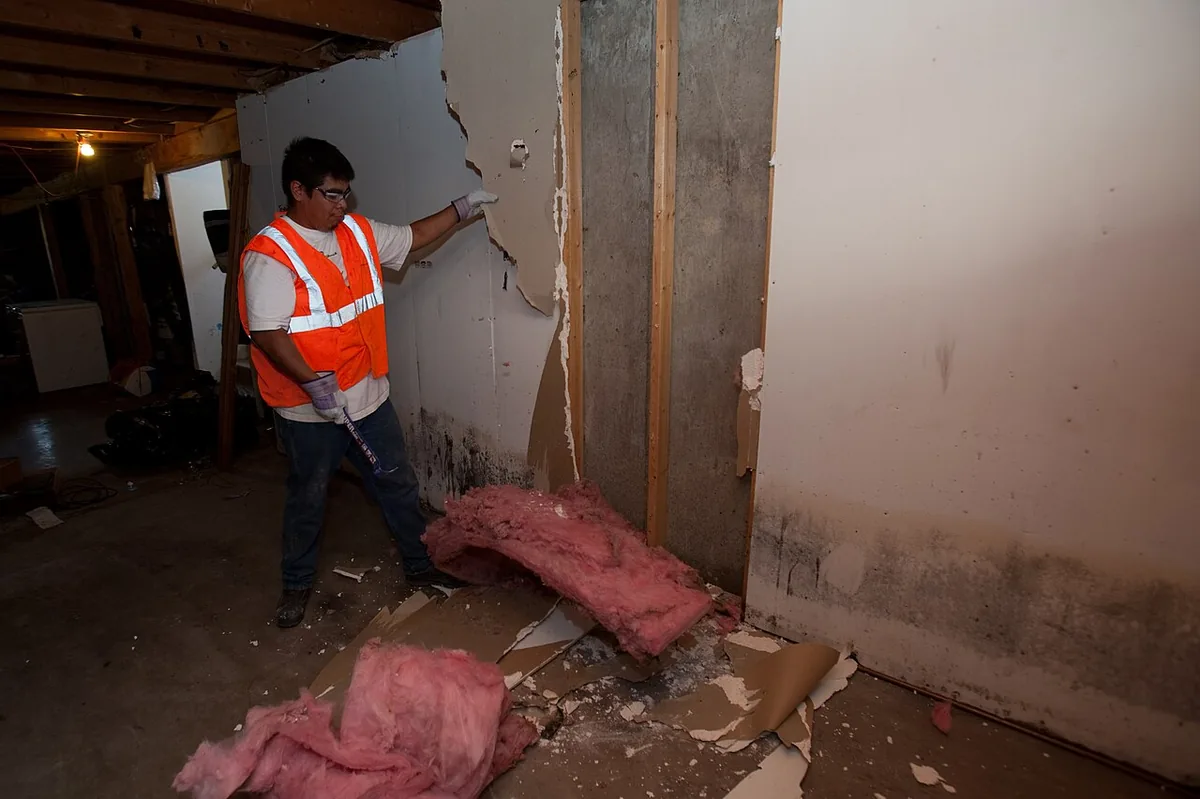
Swollen base and the bottom of a finished wall. Drywall wicks. A common approach is to remove a lower strip so cavities can dry and be inspected, then replace that strip after the log is closed. Plaster and masonry need a different conversation; they are not “just like drywall.”
Insulation in a wet cavity. Wet batt in a finished wall is often removed rather than hoped dry.
Some contents. Particle-board furniture, boxed paper and carpeted risers may leave. Solid pieces can often be moved to a dry room.
None of this is a rule for every address. Readings and category decide.
What may stay
A sealed concrete floor, tile over a sound bed, and non-porous furnishings often remain after cleaning and drying. Hardwood and engineered floors depend on how long they sat and whether they have already cupped. We will tell you when a finish is a later rebuild question, not a mitigation guess.
A decision table you can use in the first conversation
| Material | Often leaves | Often stays pending readings |
|---|---|---|
| Carpet pad | Yes, after more than a brief clean spill | Rarely |
| Carpet face | After dirty water, or if it will not dry evenly | Sometimes, after a clean, short event |
| Lower drywall / wet batt | Commonly a bottom strip plus wet insulation | Upper wall if meters stay at target |
| Base trim | If swollen or trapping a wet edge | If it lifts cleanly and is still sound |
| Furniture | Particle board and soaked upholstery | Solid pieces moved to a dry room |
Cost, rebuild and why they are separate
A typical basement pump-and-dry on this site is described between $750 and $4,000. Putting finishes back is a later scope. Mixing those conversations is how a household hears two very different numbers for “the basement.” Ask us to separate mitigation from rebuild on the written estimate. Typical house mitigation bands ($1,300–$5,500) still apply when the wet area is larger than a single lower level.
Workplaces that use a lower level for records or a break room should plan for a period when that room is out of service. See commercial water damage.
If this is not the first time the room has taken water
A second or third soaking is a reason to talk about finishes that can be lifted in pieces rather than a glued-down system that fails as a unit. We present those options after the space is dry. We do not sell a “flood-proof basement.” We do sell an honest sequence: dry first, then choose finishes that will be less painful if a pit or a door fails again.
Below-grade offices, studios and a shop storage room
The same materials leave for the same reasons. The difference is authorization and downtime. A manager may need a temporary path around the wet zone, a notice to tenants, and a date when the room can reasonably return to use. That date follows the log, not a hoped-for Monday. Photograph labels on boxes before they move; memory fades once a dumpster is full.
A note on “it looks dry this afternoon”
A floor that feels dry to a bare foot can still hide a wet pad or a damp bottom plate. That is why we use meters and a log rather than a touch test. If someone already ran household fans all day, tell us — it changes what we expect to see, not whether we still measure.
Frequently asked questions
Can you dry a finished basement without removing anything?
Sometimes, if the water was clean, shallow and caught early, and meters support it. That is not the usual case after a soak.
We just remodeled this room. Can everything be saved?
We will try to limit removal to what drying and hygiene require. A new finish is not a reason to leave wet pad in place.
How long before we can talk about new flooring?
After the moisture log is closed, not after the first dry afternoon.
Is a walk-out basement treated the same as a fully below-grade room?
The assemblies may be similar. Outdoor entry at a patio door can change category. Tell us how the water arrived.
Do you haul the debris?
Removal and disposal of what we take out is part of the mitigation conversation. Ask us to put it in the estimate.
Finished lower level wet in a home or workplace? Call (484) 293-9465 any time.