
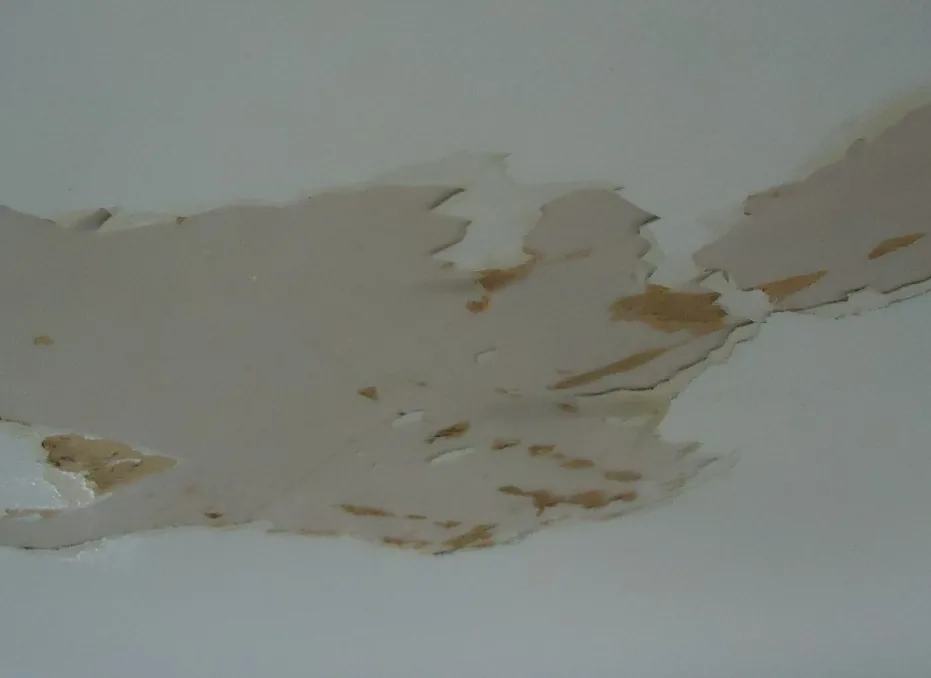
A brown circle on an upstairs ceiling after a cold snap is easy to misread. It may be a split line, melt at an eave, or water that traveled along a joist from a room away. This guide is a comparison, not a diagnosis you should make from a photograph alone.
By Chester County Water Damage
If the ceiling is sagging, stay out from under it and call (484) 293-9465. We handle indoor water from water damage restoration 24/7 in homes and workplaces, including Berwyn and nearby Main Line streets.
Three common sources that look alike on day two
A plumbing line that split or a fitting that let go in a bath, a radiator run, or an uninsulated rim. The stain may appear below a little-used room. See frozen and burst pipe cleanup and hose bibs and additions.

Melt at an eave or an ice edge. Water can enter at the roof edge and travel before it drips. We are not a roofing contractor. If the eave is still taking weather, a roofing trade has to close the entry or we will only be drying the same spot again.
A leak that started during the freeze and declared itself on the thaw. The break happened earlier; the drip waited. Photos of the attic edge, the bathroom above, and the exterior after the melt help sort the story.
None of these should be painted over as a “cosmetic stain” until someone has metered the assembly. Paint on a damp ceiling is a delay.
What to do in the room below
- Do not stand under a bulging ceiling. A trapped volume of water can let go.
- If you can stand to the side and the finish is drywall, a small, controlled drain into a bucket is sometimes safer than waiting for a collapse. Plaster is different; wet plaster can drop in heavy pieces — keep people out and do not poke it.
- Photograph the stain, the room above if you can enter it, and the exterior eave.
- Catch what you can with a bucket; do not use a shop vacuum on dirty or unknown water. See what not to do after indoor water.
A comparison, not a self-diagnosis
| Clue | Leans toward plumbing | Leans toward eave or ice edge |
|---|---|---|
| Stain sits under a bath, a radiator, or a known line | More likely | Less likely, but water still travels |
| Stain is near an exterior wall after a thaw | Possible travel from a rim | Common for eave entry |
| Water runs only while the roof is melting | Less likely | More likely |
| You can hear or see a fitting | Strong clue | Still check the eave |
When in doubt, we look at both. A Main Line house can have an aging eave and a vulnerable addition on the same night.
After the immediate drip is controlled
The job is still the cavities. A stain the size of a dinner plate can hide a wider wet bay. Typical house mitigation on this site is in the $1,300–$5,500 guide when the scope is typical. A workplace waiting room with a stained ceiling should not open under a bulge; see commercial water damage.
We will not invent a cause for a claim. We will describe what we found and dry what we are hired to dry. Roof repairs stay with a roofer. Pipe repairs stay with a plumber.
Attics, insulation and a safe look above
If we can enter the attic safely, we will look at the underside of the roof edge and at any lines that cross the wet bay. We will not crawl a unsafe, untreated attic in the dark to satisfy curiosity. Households should not either. Insulation that is wet may have to come out; insulation that is dry around a single drip may stay. That decision follows what we can actually see and measure, not a rule of thumb from a different house.
If a bathroom fan or a poorly sealed can light is in the same bay, mention it. Those details change the story without changing the need to dry the ceiling assembly.
Frequently asked questions
Can I just paint the circle after it looks dry?
Not until readings support it. Paint on a damp assembly traps the problem.
Is an ice edge the same as a burst pipe for insurance?
They can be different policy conversations. Your carrier decides. Photograph both the interior and the eave.
The ceiling is plaster. Should I poke a drain hole?
Usually no. Keep people out and call. Wet plaster can fail in large pieces.
Do you repair the roof?
No. We dry the interior and can tell you when weather is still entering.
How fast should I call?
As soon as you see a new stain or a bulge, especially after a thaw. (484) 293-9465 is 24/7.
Offices and waiting rooms
A professional office should treat a bulging ceiling as a safety issue, not a weekend cosmetic item. Close the space under it, photograph it, and arrange after-hours drying once the source is controlled. Staff should not sit under a stain “until the roofer calls back.”
A new ceiling stain after a freeze-thaw? Call (484) 293-9465 — homes and workplaces.