
In rural parts of Chester County, a lower mechanical room often holds a well pressure tank, a pump controller, and the start of the plumbing — sometimes a few feet from a sump or a walk-out door. If dirty water reaches that room, two problems arrive at once: a wet building, and a drinking-water source that may be compromised.

By Chester County Water Damage
We dry rooms. We do not test wells, disinfect wells, or repair well equipment. If the space is wet now, call (484) 293-9465. Basement flooding help is 24/7, including Chester Springs and nearby large-lot addresses.
Treat the water as unsafe until a qualified test says otherwise
The Pennsylvania Department of Environmental Protection publishes flooding resources for private wells and advises caution after a well is impacted, including disinfection guidance and laboratory testing for bacteria before you rely on the water again (PA DEP flooding resources; PA DEP well disinfection). Penn State Extension similarly tells households not to use a flooded private source for drinking, cooking, or brushing teeth until testing confirms it is safe (Penn State Extension).

Stay away from a flooded well pump because of shock risk. If you see a cracked casing, a missing cap, or mud at the wellhead, call a licensed well contractor. Those steps are not part of our mitigation scope.
What we will do in the mechanical room
- Enter only when it is safe to do so.
- Photograph the room, the tank, the controller, and the high-water line.
- Extract and dry the structure — floors, walls, and cavities — under basement flooding and, if the water was overland, flood cleanup.
- Leave well repair, shock chlorination, and lab testing to the trades and labs that do that work.
If the building also has a septic system, mention it. We do not repair septic tanks. Flooded on-lot systems are another specialist conversation; we will not pretend a dry mechanical room equals a safe septic field.
A split checklist
| Task | Who typically handles it |
|---|---|
| Extract and dry the room; moisture log and photos | Water mitigation crew |
| Electrical safety at the pump and panel | Qualified electrician if needed |
| Inspect casing, cap, and wellhead; repairs | Licensed well contractor |
| Disinfect and test for coliform bacteria | Owner with PA DEP guidance, or a well contractor and a DEP-certified lab |
| Temporary bottled or boiled water | The household, following official advice |
Boiling is an emergency step for some biological concerns and is the wrong step if chemical contamination is suspected. Follow DEP and Extension language, not a restoration blog, on that point.
Access notes on larger lots
Long drives, gates, and dogs slow the first hour if we learn about them late. Mention all three. A workshop or barn that shares a well or sits downhill of a failed pit should be on the same call, even if no one lives in it. See commercial water damage when that outbuilding is a workplace.
Typical house mitigation on this site is in the $1,300–$5,500 guide; a wet crawl plus a mechanical room can be quoted from what we measure. Well work is billed by others.
Septic fields, chemicals and a lane we will not cross
A flooded on-lot system, a tipped oil tank, or a chemical smell in well water is outside our trade. Photograph what you see, keep people away, and call the specialists and agencies those problems require. We will still dry a wet room when it is safe, and we will not treat a clean-looking faucet as proof that those other systems are fine.
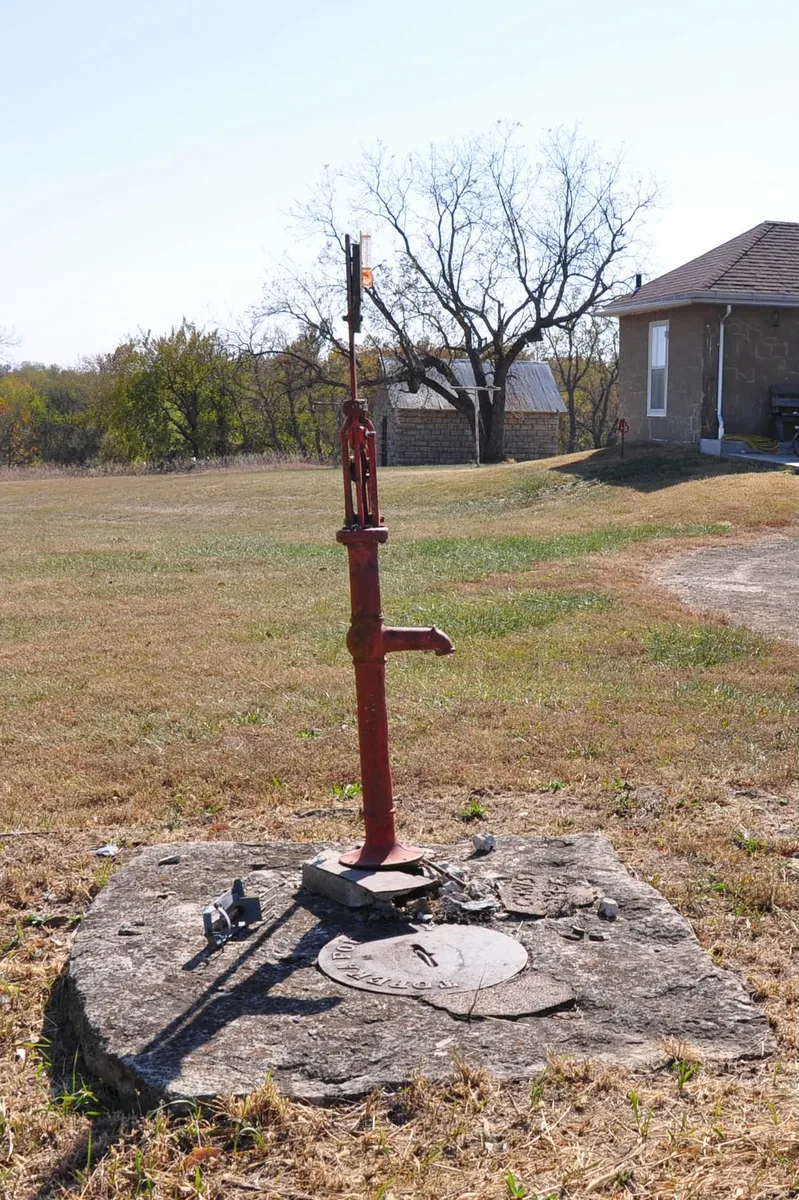
Households on larger lots should also mention any detached dwelling that shares the same source. A dry main house does not settle the question for a cottage whose mechanicals sat in water.
Frequently asked questions
Can I run the faucet if the mechanical room was wet but the wellhead looks fine?
Do not assume the source is safe. Follow DEP and Extension guidance and test.
Will you shock the well for me?
No. We can photograph the room. Disinfection is a well-contractor or owner procedure under official instructions.
The power is out and the pump is under water. Now what?
Stay away from it. Cut power only from a dry location if you can. Call an electrician and a well contractor as needed, and call us for the room once it is safe.
Does a homeowners policy cover the well and the basement?
Those can be different questions, and flood exclusions may apply to overland water (FEMA). Your agent reads the policy.
Are you really 24/7 this far from a borough?
Yes. Drive time is longer; the number still answers. (484) 293-9465.
After the room is dry
Keep the photo set. A well contractor and a lab will ask what happened in the room even after the floor looks fine. Do not close a wet cavity behind new paint just because the tank is back online. The structure still needs a closed moisture log.
Floodwater reached a room with well gear? Call (484) 293-9465 for the building; use official well guidance for the drinking water.